




From True’s War Room in Bangkok to Network Towers in Hat Yai: How the Company and Its People’s Spirits Put Tremenduos Efforts in Maintaining Connectivity Services During the Hat Yai’s Worst Flooding in Decades
Songklha, Thailand – On the night of Nov 19, 2025, Hat Yai—Songkhla Province’s economic heart and one of southern Thailand’s most vibrant cities—was engulfed by dark storm clouds driven by fierce winds and relentless rain. It was nature’s first warning of the catastrophe to come.
A city that never sleeps, Hat Yai is home to more than 400,000 residents, bustling with tourists, commerce, and livelihoods. That night, few imagined how quickly everyday life would be swept into peril.
A Thin Line Between Life and Death
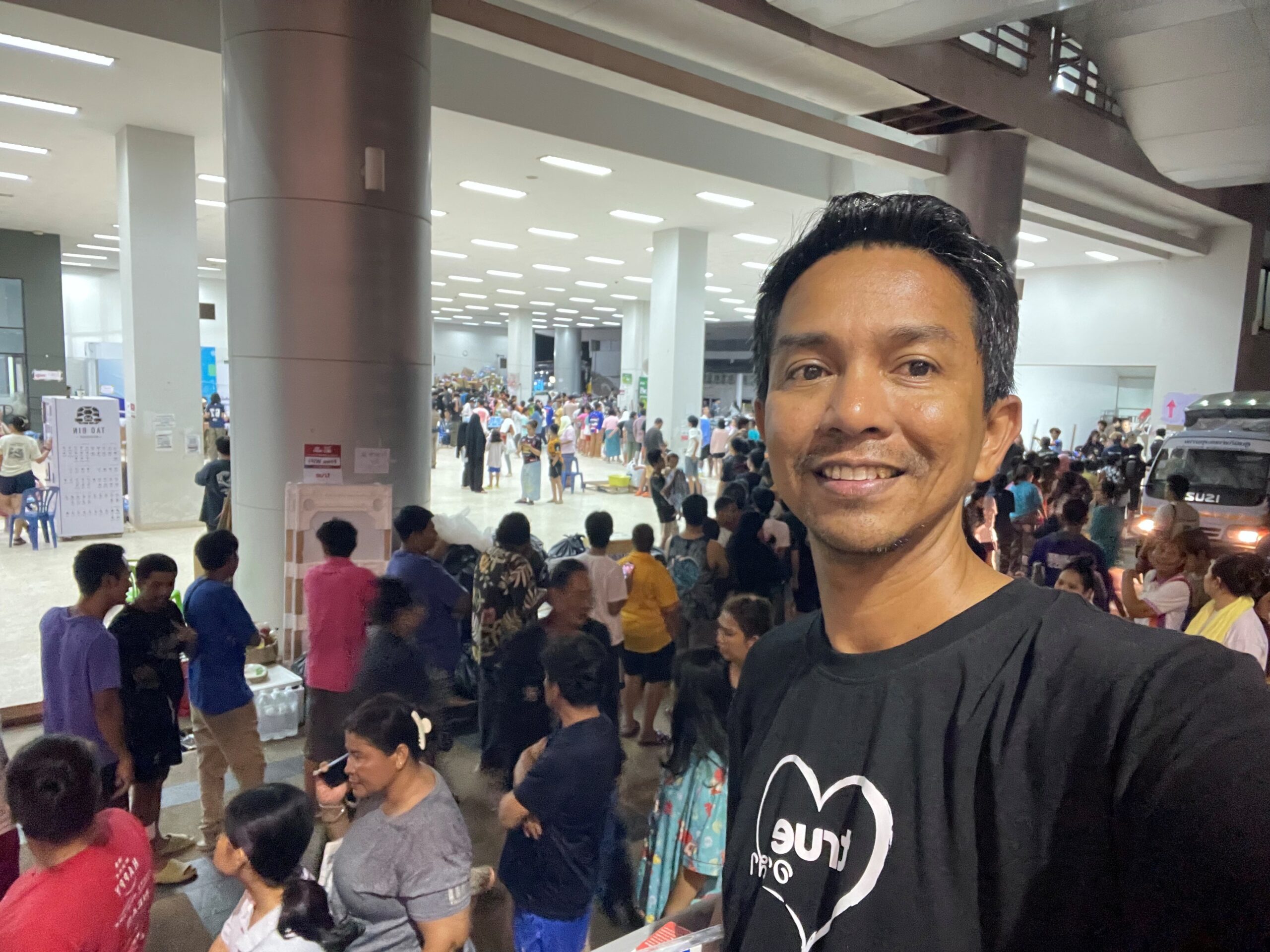
“Memories of past floods were still vivid in my mind. The water reached waist level back then, and I assumed this year would be no different,” recalled Seksak Choplod, Head of Regional Operations, Southern Region at True Corporations. “We moved our belongings to higher ground, based on previous flood levels, confident everything would remain under control.”
A Hat Yai native who had lived and worked in the city his entire life, he believed he understood its geography well. The city’s broad despression – a basin-like topography – has made flooding a recurring challenge.
As a family head, Seksak prepared to tackle the upcoming flooding by assigning responsibilities: his wife and daughter moved their car to a previously flood-safe area, while preparations were made at home under one central assumption: This time would be just like before.
Nature, however, had other plans.
From Nov 19 to 21, it was raining cats and dogs, with floodwaters rising to waist height before receding to knee level—almost identical to previous years. To avoid risk, the family split into two groups. Female group relocated to the community hall, which had remained safe in earlier floods. He and his son stayed overnight at a neighbor’s two-storey house to watch out the situation.
The decision seemed logical. Within days, it would become a fight for survival.
When Communication Fails: Fear Takes Hold
On Nov 22, 2025, 3:00 a.m.
What began as heavy rain escalated into a violent storm. Water no longer rose gradually—it surged. Flood levels increased by nearly half a meter per hour, Seksak estimated.
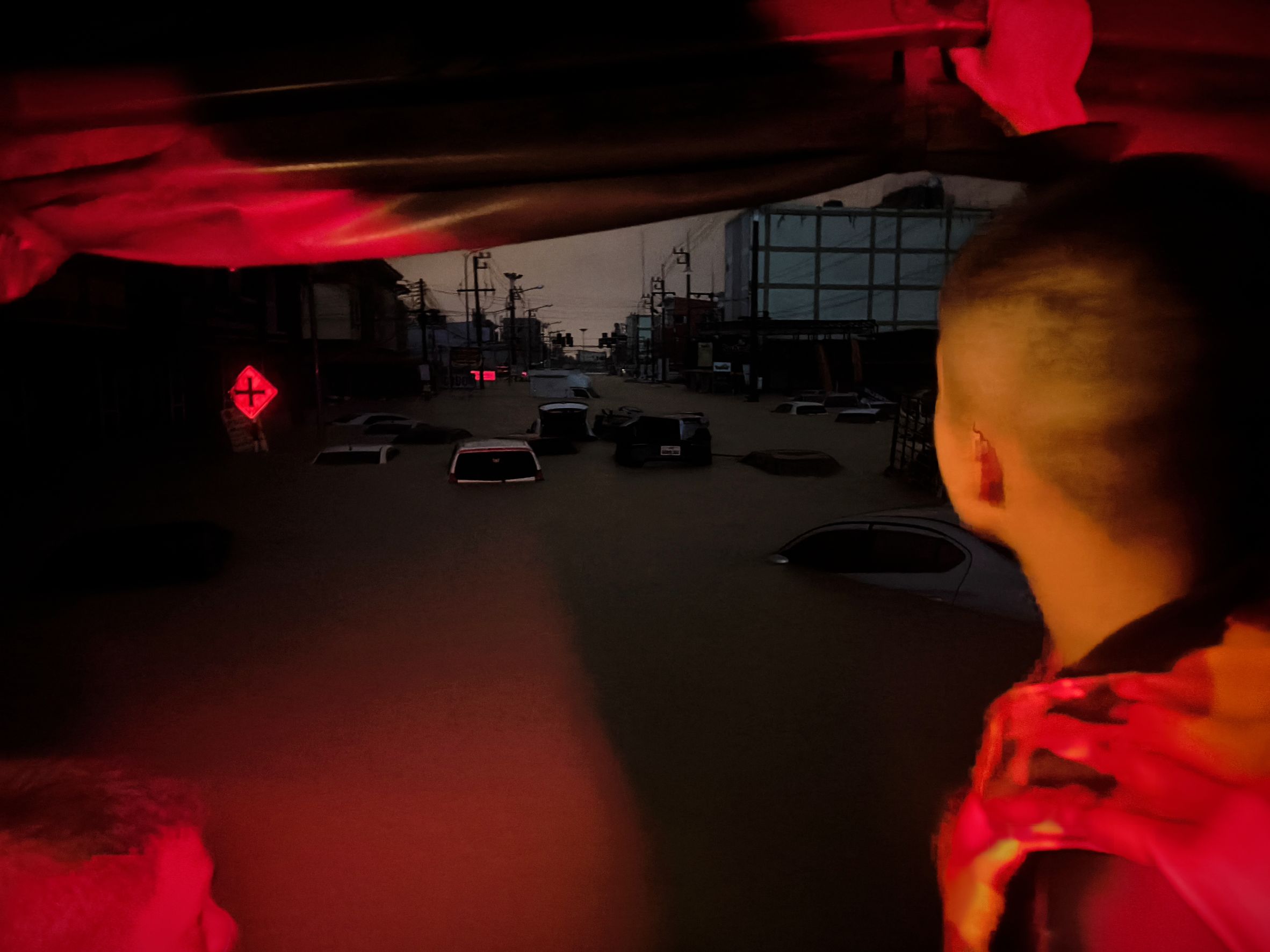
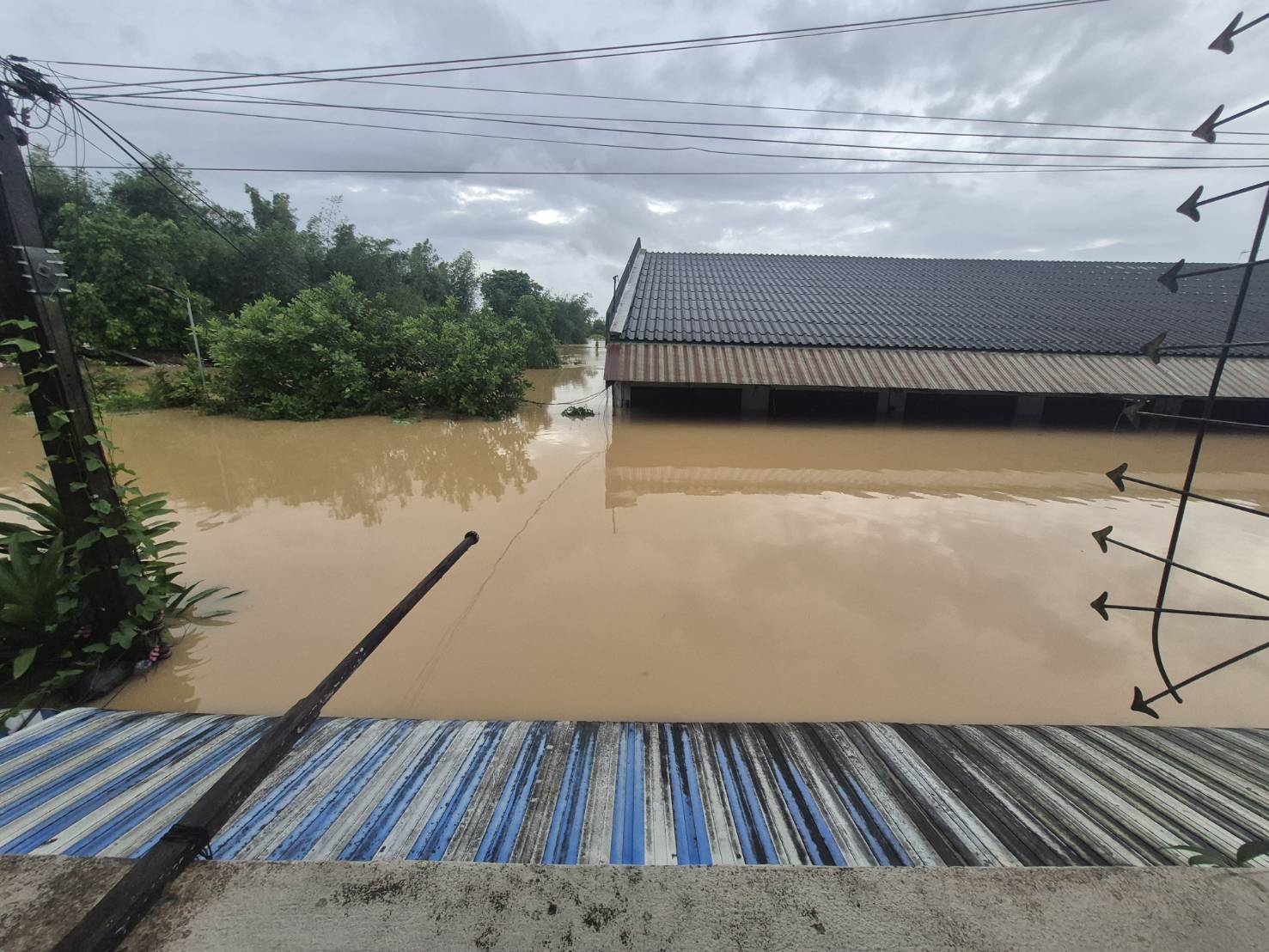
Looking out the window, he felt his heart sink. His home—filled with memories—was now completely submerged beneath raging currents. Not even the roof was visible.
Darkness, isolation, and hunger soon followed. Electricity and water supplies were cut entirely, crippling communication services dependent on power. Emergency provisions dwindled to a few packets of instant noodles. Drinking water ran out, forcing them to collect rainwater in basins just to survive.
As floodwaters crept toward the second floor, Saksan, his son, and elderly neighbors sat in darkness with no sign of rescue boats. Fear slowly gnawed at their resolve.
Meanwhile, hundreds of kilometers away at a skyscraper in Bangkok. A group of leaders at True gathered to brainsrtorm and lead the ways to provide help to the victims – employees, partners and customers.
The Business Continuity Plan (BCP) was brought up to implement immediately. At BNIC—True’s Network Intelligence Center in Bangkok, a crisis war room was activated.
Surrounded by live network dashboards, the command center was led by the Group CEO Sigve Brekke alongside the Chief Network Officer, coordinating reinforcements from central teams and nearby regions. Their mission: monitor the unfolding disaster and support frontline engineers struggling against nature on the ground.
Emergency Network Strategy
Anak Rattanachanon, a field operations specialist under Network team in southern Thailand, explained the big picture of the network’s architecture, saying that Hat Yai is served by approximately 300–400 signal towers, including around 10 Grade-A towers that function as regional core nodes—the backbone of connectivity.
“These Grade-A towers are like major arteries,” he said. “If one goes down, the impact spreads across multiple provinces.”
Because of their importance, Grade-A towers are typically located on higher ground, equipped with days-long backup generators. While Grade-B and Grade-C towers – mounted on buildings in densly-populated areas – may have a limited impact when services down.
Emergency response therefore focused on two priorities:
- Protect the Core – keeping Grade-A towers operational
- Creative Rerouting – redirecting signals from surrounding towers to temporarily replace those that had lost power
By adjusting transmission power and antenna direction, engineers enabled limited emergency communication in central Hat Yai—even as travel to flooded sites became impossible due to currents reaching up to six meters in some areas.
“In today’s world, communication is no longer a luxury,” Anak said. “In a crisis like this, it becomes a lifeline—especially for families trying to reach one another or access evacuation information.”
Racing Against Time
For Suwikrom Kaewsongmuang, Lower South Network Operations, Submarine Cable Landing Station Songkhla(CLS-SKA) based in southern Thailand, the crisis was deeply personal.
His home, located two meters above street level, was soon surrounded—and then inundated—by floodwaters. As he became a disaster victim himself, an alert sounded: a Grade-A node serving Hat Yai International Airport and surrounding communities was on the verge of collapse.
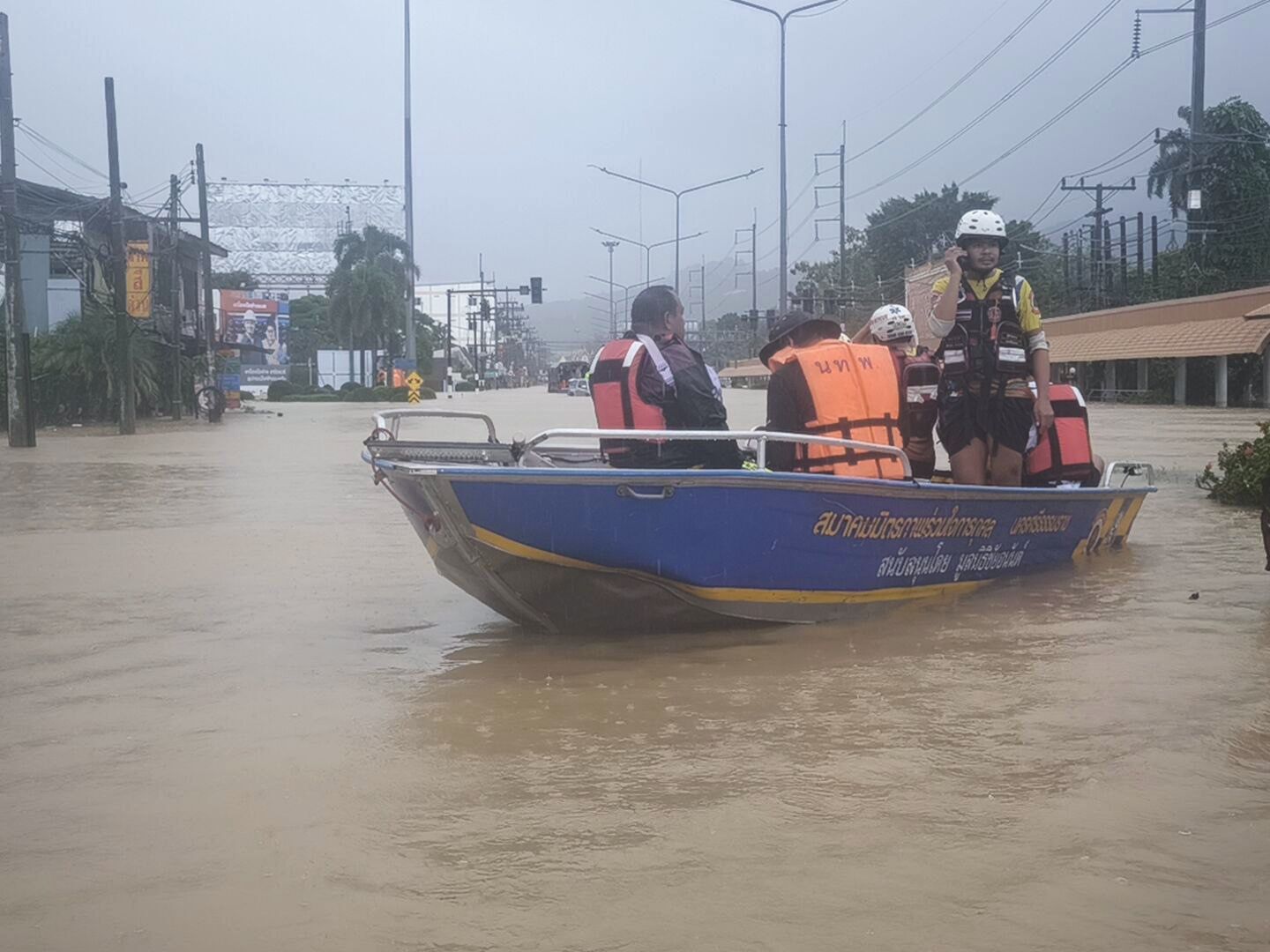
With power cut for safety reasons and no access by road, the node faced imminent shutdown.
Suwikrom raised his hands to protect the backbone.
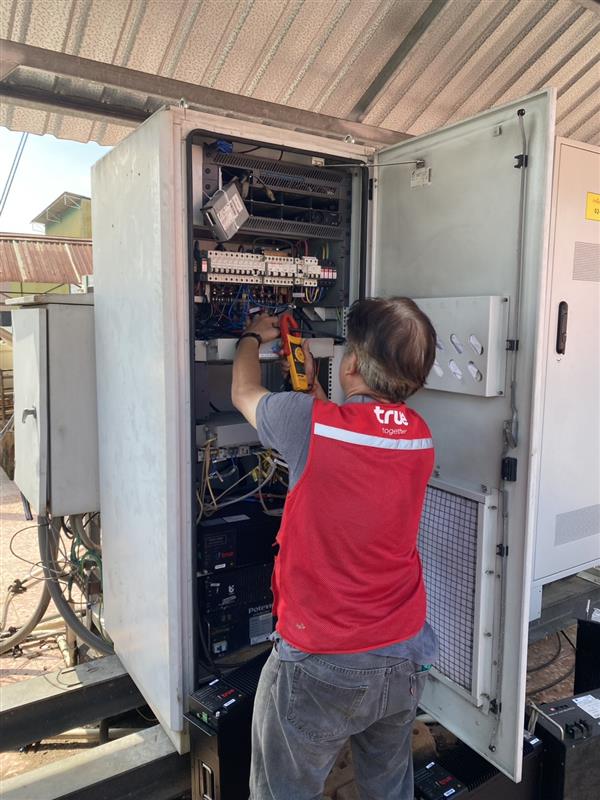
Together with colleagues, he transported a heavy generator by boat through violent currents, installing it under extreme conditions. Fuel had to be replenished continuously to keep the network alive.
Yet an even greater challenge loomed.
A regional core node, serving seven southern provinces and millions of users, was also running on backup power—with less than 12 hours of fuel remaining. If it failed, the entire lower South would be plunged into a communication blackout.
The mission was clear: deliver 300 liters of fuel before dawn.
The first trip—only three kilometers—took four exhausting hours due to rain, debris, and unseen underwater hazards. On the return journey, the team rescued three stranded civilians, clinging to rooftops amid the storm.
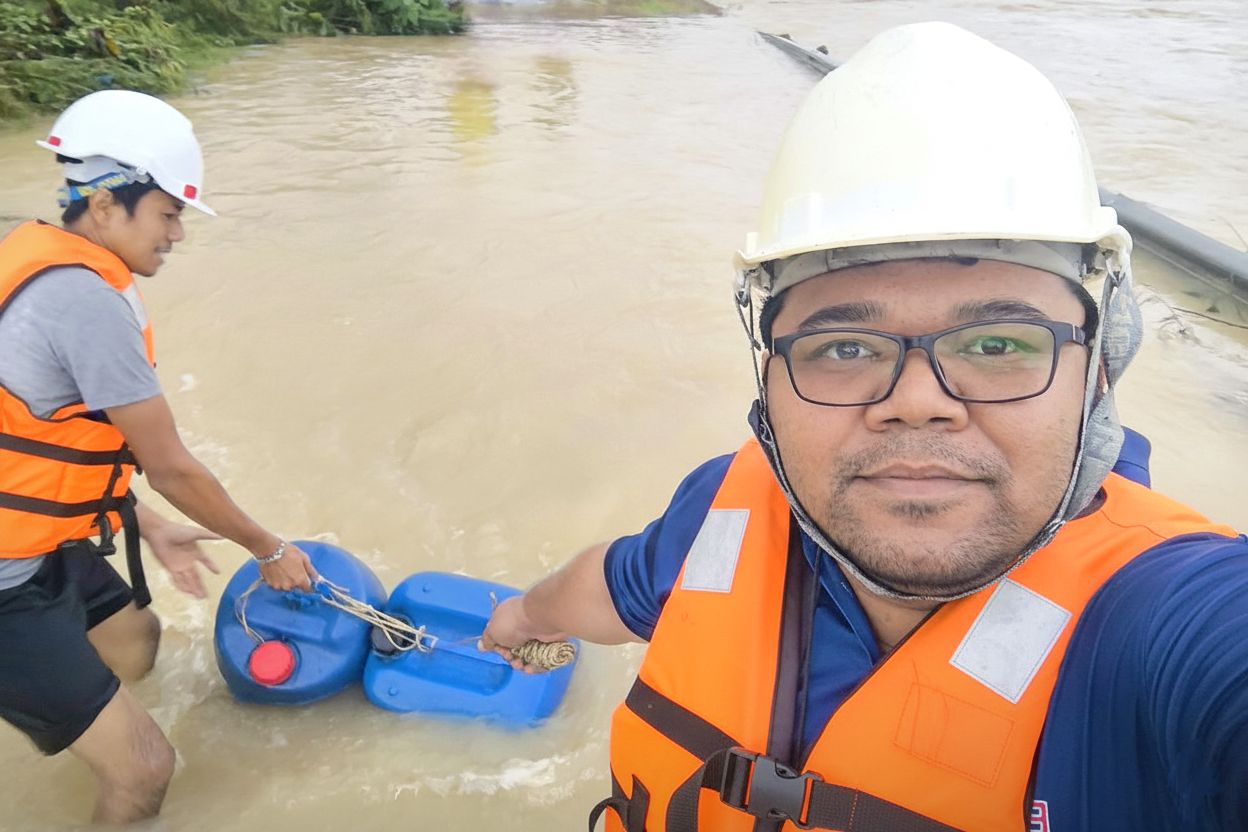
A second run proved even more dangerous. Rescue boats were damaged. Military trucks could only bring the team within 1.8 kilometers of the site. In total darkness, Suwikorm and seven soldiers spent hours clearing submerged vehicles with ropes just to pass.
At 6:00 a.m., the first military unit had to withdraw due to rising water.
Relief arrived when an engineering battalion with heavier equipment took over. With stronger boats and trucks, the remaining fuel was delivered in a single trip—just in time.
The network’s heartbeat continued.
What drove Suwikrom was not obligation, but empathy.
“While transporting fuel, we saw people trapped on rooftops, calling for help,” he said. “I kept thinking—if communication fails, how devastating it must feel not being able to reach your family.”
Even as his own home and car were submerged, he chose to act.
“When signals come back on and people hear their phones ring—it gives us strength. That sound means hope.”
From Survivor to Supporter
On Nov 24, 2025, 9:00 a.m.
After days of relentless rain, the skies finally cleared.
With supplies gone and no information, Seksak and his son made a desperate decision. Using a large plastic crate as a flotation device, they swam 500 meters through floodwaters—at times over their heads—toward a main road.
“It was a true gamble with our lives,” he said. “We believed a shopping mall on higher ground might still have power. All I wanted was to charge my phone and contact my family.”
When his phone finally powered on, he described the feeling as being reborn.
At Prince of Songkla University, now a massive evacuation center sheltering nearly 10,000 people, he witnessed the scale of devastation firsthand.
The memory of isolation struck him deeply. This trigger made him realised the vital role of connectivity services in the crisis time: a lifeline.
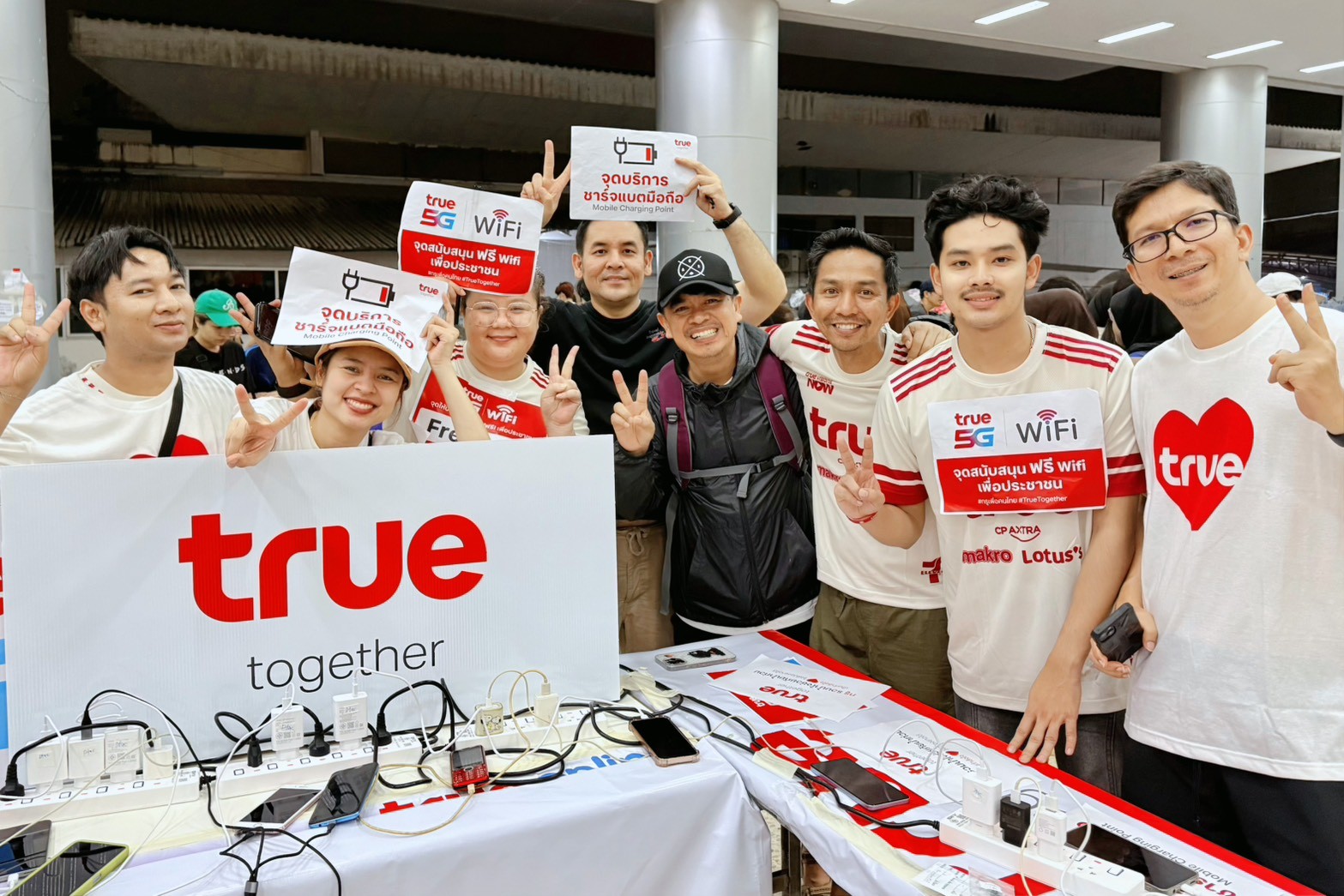
Immediately, Seksak shifted from victim to volunteer—supporting mobile base stations, coordinating with network teams as a role of project manager, setting up charging stations, distributing demo phones, providing free Wi-Fi, and mobilising nearby True and dtac service centers to help evacuees reconnect.
Lessons the Flood Left Behind
Reflecting on the disaster, Seksak shared three lessons he learned.
First, communication is not merely about data—it is a lifeline that mentally makes human alive. Hearing the voice of a loved one in a crisis provides hope as vital as food or water.
Second, warnings must never be underestimated. Preparedness must assume the worst—because there may not be a second chance.
Finally, empathy means more than understanding suffering. It means taking action to ease it—whether as a victim or a helper.
In the darkest moments, even the smallest signal of help can save lives and restore hope beyond measure.